
 By
By 
Valentina Palcovicova | Asia Human Rights Researcher
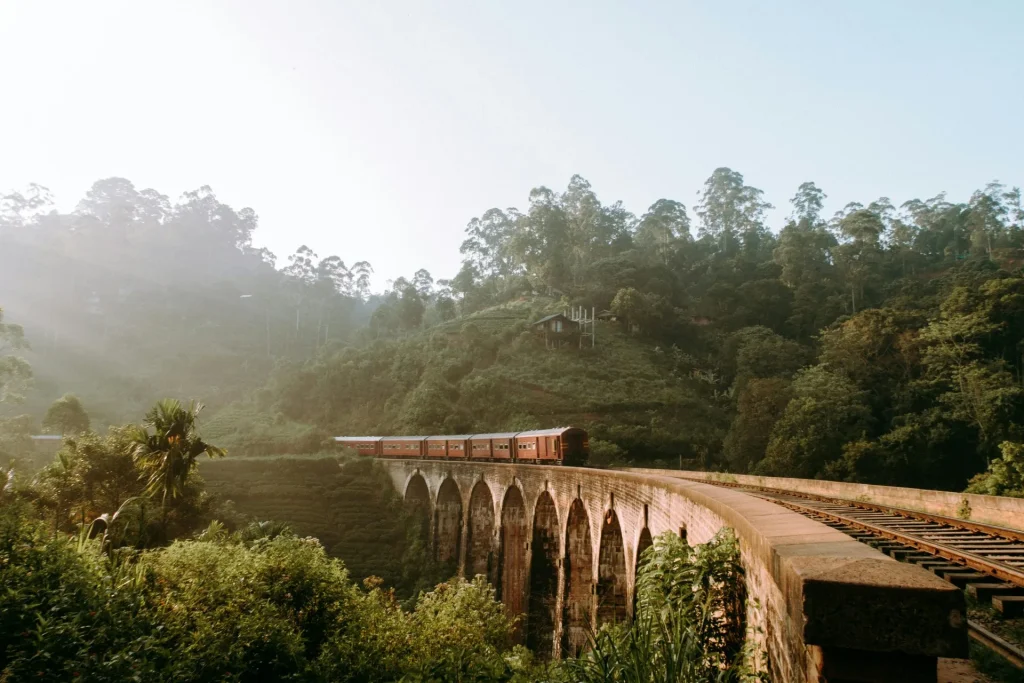
A Brown Train Rail Surrounded by Green Leaf Tree, by Genine Alyssa Pedreno-Andrada via Pexels, May 31st, 2019.
Women keep facing persistent challenges to their rights in Sri Lanka, including under-representation in politics, gender-based violence, and inequality.
Sri Lanka, a country with a rich cultural history, continues to face significant challenges regarding women’s rights. Despite being home to the world’s first female prime minister, modern Sri Lanka sees limited political representation and persistent gender-based discrimination.
Underrepresentation in Politics
In the recent presidential election campaigns, not a single female candidate emerged, despite women making up over 50 percent of the electorate. Currently, women occupy only 5.3 percent of parliamentary seats, one of the lowest rates in the region. This stark gap raises growing concerns among human rights groups over the lack of female voices in national decision-making.
Gender-Based Violence Remains Rampant
New government and UN reports reveal troubling statistics: at least 40 percent of Sri Lankan women experience violence from intimate partners during their lifetime. Shockingly, 90 percent report facing sexual harassment in public spaces, particularly on public transportation—a statistic that has sparked calls for government action.
Outdated Laws Fuel Inequality
Human rights advocates are pushing for reforms in the Muslim Marriage and Divorce Act (MMDA), which allows girls as young as 12 to be married without their consent. The government’s failure to amend this outdated law continues to subject young girls to forced marriages, violating global human rights norms.
Additionally, Sri Lanka’s restrictive abortion laws—permitting termination only when a woman’s life is at risk—force many into unsafe, illegal procedures, raising maternal health concerns.
Initiatives for Empowerment
Amidst these challenges, some positive initiatives shine through. ‘Amba Yaalu’, the country’s first resort entirely run by women, recently opened, offering employment and leadership opportunities for women in the hospitality sector. This project represents a growing but still rare space where women break traditional barriers.
International Pressure and Local Activism
The United Nations Committee on the Elimination of Discrimination against Women (CEDAW) recently reviewed Sri Lanka, urging the government to strengthen protections against gender-based violence, increase women’s political participation, and reform discriminatory laws.
Sources and Further Readings:
Amnesty International. (2024). Sri Lanka 2023 human rights report. Retrieved from. https://www.amnesty.org/en/location/asia-and-the-pacific/south-asia/sri-lanka/report-sri-lanka/.
Associated Press. (2024, March 8). A resort entirely staffed and run by women in Sri Lanka seeks to break gender barriers. AP News. Retrieved from https://apnews.com/article/1812d3dcc7031ca09a2283dc1ead8050.
Office of the United Nations High Commissioner for Human Rights. (2025, February). Experts of the Committee on the Elimination of Discrimination against Women praise Sri Lanka’s progress but urge action on domestic violence and legal reforms. Retrieved from https://www.ohchr.org/en/meeting-summaries/2025/02/experts-committee-elimination-discrimination-against-women-praise-sri.

Comments