
 By
By Press Release
7th International Baloch Conference: “The Struggle for Balochistan – Rights, Resistance, and Regional Significance”
15 September 2025, Geneva, Switzerland
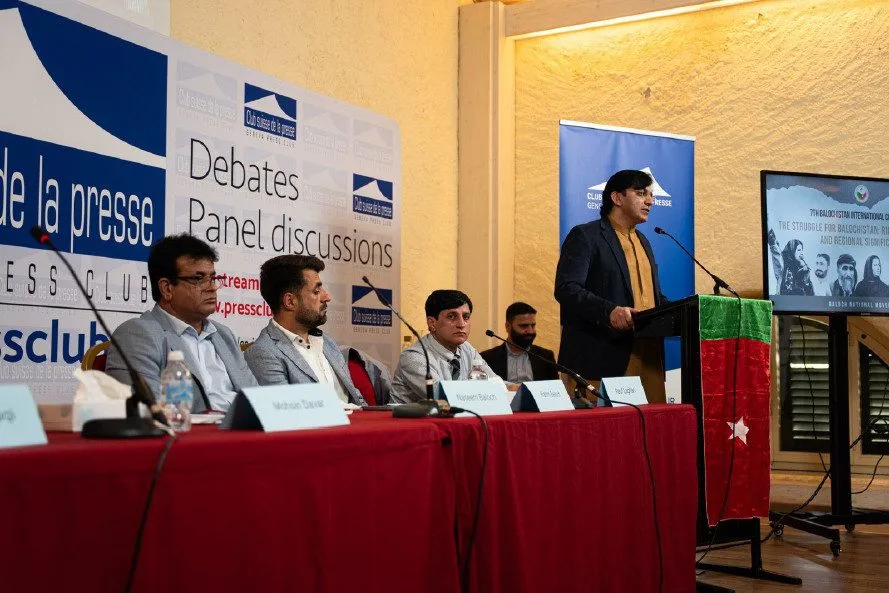
© Global Human Rights Defence, 2025.
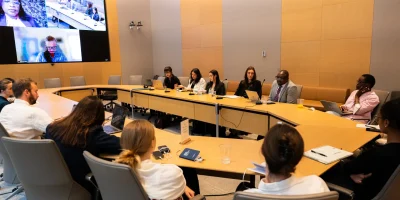
In Geneva, the 7th International Baloch Conference convened under the theme “The Struggle for Balochistan: Rights, Resistance, and Regional Significance”. It gathered political leaders, human rights defenders, journalists, and members of the Baloch diaspora to address the worsening human rights crisis in Balochistan. Organized by the Baloch National Movement, the event provided a platform for survivors’ testimonies, legal experts, and international allies to highlight decades of repression and to call for immediate global action.
Participants emphasized that the Baloch struggle is not directed against the Pakistani people but against structures of occupation and systemic injustice that continue to deny the right to self-determination. “We don’t ask for sympathy. We ask for solidarity, recognition, rights and freedom for the people in Balochistan to live in peace and harmony,” one speaker declared, reflecting the collective appeal of the conference.
Recent reports presented at the conference underscored the scale of violations. According to the Human Rights Council of Balochistan, in 2024 alone more than eight hundred individuals had forcibly disappeared and nearly five hundred were killed in extrajudicial operations. Independent
monitors have documented that in May 2025 over one hundred people had disappeared and at least twenty-seven extrajudicial killings took place in that single month. Amnesty International has warned of widespread surveillance and censorship, while United Nations experts have highlighted the excessive impact of counter-terrorism measures on civilians in Balochistan.
These findings confirm what participants described as a pattern of systematic repression, silencing of dissent, and erosion of civic space. Hatin Baloch, a human rights activist and coordinator of the information center PAANK, presented harrowing accounts of torture, enforced disappearances, and intimidation of families who demand justice. He explained that the region remains under near total media blackout, with journalists and lawyers operating under constant threat.
Rauf Laghari, a leader in the Indian National Congress and representative of the World Sindhi Congress, broadened the conversation by stressing that the Baloch cause is part of a wider crisis of justice across South Asia. He argued that systematic denial of rights constitutes both a humanitarian tragedy and a direct threat to international security. “Your struggle is our struggle, your pain is my pain, and your freedom is our freedom,” he affirmed, urging solidarity and accountability.
Mohsin Dawar, member of Pakistan’s National Assembly, condemned the structural flaws of Pakistan’s political system, which he argued cannot protect the fundamental rights of Baloch, Pashtun, and Hindu communities. He reported that hundreds of political activists and workers have disappeared in recent months and stressed that alliances across communities are the only way to pressure the state for genuine reform.
Dr. Mohammad Taqi, journalist and political analyst, described the Pakistani state as one dominated by the army and hollowed of credible civilian rule. He noted that Pakistan and Iran continue to treat Balochistan as a reservoir of resources rather than as a homeland with aspirations of its own. He predicted systemic collapse if the current model persists and called for unity among Baloch, Pashtun, and Sindhi leaders around a common agenda at this critical historical moment.
Naseem Baloch, survivor of torture and current chairperson of the Baloch National Movement in exile, recalled Balochistan’s history of autonomy prior to its occupation in 1948. He described repeated waves of military repression in 1948, 1962, 1973, and the 2000s, each of which was marked by arrests, displacement, and intensified human rights abuses. He stressed that international organizations have already documented mass graves, disappearances, and torture, and called on the United Nations to send an investigative mission to Balochistan. International legal experts reinforced these appeals.
Reed Brody of the International Commission of Jurists drew parallels with other regions that endured regimes of terror and reminded the audience that silence by the global community only enables impunity. He urged international scrutiny and accountability for those responsible for crimes against civilians.
John McDonnell, Labour Member of the British Parliament, addressed the conference online. He emphasized the responsibility of the United Kingdom toward the Baloch people, given Britain’s historical involvement in the region. He urged the UK government to recognize its obligations and to confront the ongoing human rights abuses taking place in Balochistan. Noting that the UK continues to provide aid to Pakistan, he stressed that such support must be accompanied by accountability and respect for fundamental rights. He concluded with a commitment that he and his colleagues in Parliament will continue pressing for recognition of the Baloch people’s right to self-determination.
The conference concluded with a strong consensus that the right to self-determination, as enshrined in the United Nations Charter, must be upheld. Speakers insisted that the moral responsibility to act lies not only in the pursuit of justice for the Baloch people but also in the broader goal of securing lasting peace and stability in South Asia.
Comments