
 By
By 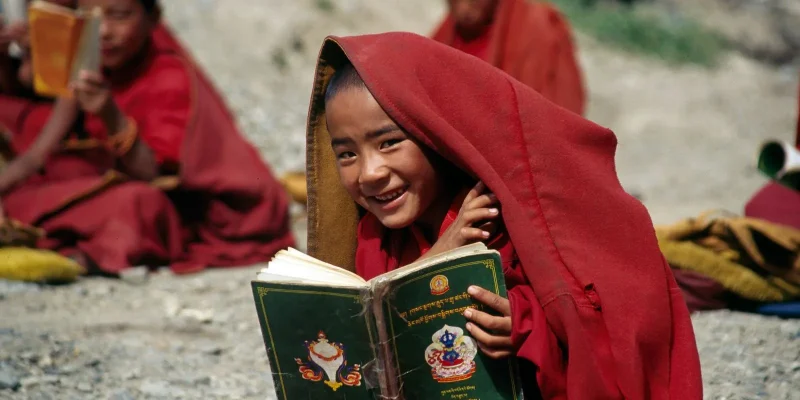
06-05-2026 | Oluwatobi Ibikunle | Asia Team Researcher
Global Human Rights Defence.
A new report by Human Rights Watch has raised concerns about China’s preschool language policy, the “Harmonisation Plan”, warning that mandatory Mandarin instruction in Tibetan areas is causing the erasure of the Tibetan language and cultural identity among young children of the ethnic group.
A Human Rights Watch report has raised concerns about a particular Chinese pre-school policy. In July 2021, a Ministry of Education Directive, “The Children’s Speech Harmonisation Plan”, required the use of standard Mandarin Chinese as the medium of instruction and care in all pre-school settings across China, including ethnic minority areas. Teachers are expected to use daily teaching and game activities to encourage children to communicate and express themselves in Mandarin.
The report titled “Start with the Youngest Children: China Uses Preschools to ‘integrate’ Tibetan” noted that this Directive has reshaped kindergarten education in Tibetan areas. In 1989, kindergarten regulations stated that ethnic minority children may use the language commonly spoken by their own ethnic group in schools. In 2012, the Tibet Autonomous Region (TAR) Education Department said that children in Tibetan Area kindergartens are taught in both Mandarin and Tibetan, and that the government is actively promoting bilingual preschool education.
However, references to “bilingual kindergarten” disappeared after the “Harmonisation plan” was issued in July 2021. The plan is said to mark the culmination of decades of policy shifts that have reduced mother-tongue education for minorities. Since the 1984 Regional National Autonomy Law, China has moved in five stages towards mandatory Chinese instruction at progressively younger ages. While this process had been completed in primary and secondary schools, kindergartens remained the last setting where Tibetan could still be used as the main language of instruction.
This has led to restrictions on Tibetan-language education in early childhood, a stage considered critical for language acquisition and identity formation. Tibetans and scholars with direct knowledge of conditions in Tibetan areas were interviewed. The interviews indicated that many Tibetan children leave preschool unable or unwilling to speak Tibetan, even to their families. Parents reported that within weeks or months of starting kindergarten, their children switch almost entirely to Mandarin. For some Tibetans, the serious concern is not only the downgrading of their language but also broader concerns about their children’s views of their culture and identity, and of its perceived status and importance.
Maya Wang, deputy Asia Director at Human Rights Watch, said that by targeting kindergarteners, the Chinese government is accelerating its campaign to deprive Tibetan children of their mother tongue, culture, and identity.
Human Rights Watch urges the Chinese government to ensure that the education of minority children includes the development of respect for their cultural identity, language, and values, in line with the Convention on the Rights of the Child. It also calls on foreign governments to urge the Chinese government to respect minorities’ rights to education in their own language, as set out in international law and in China’s Constitution.



Comments