 By
By 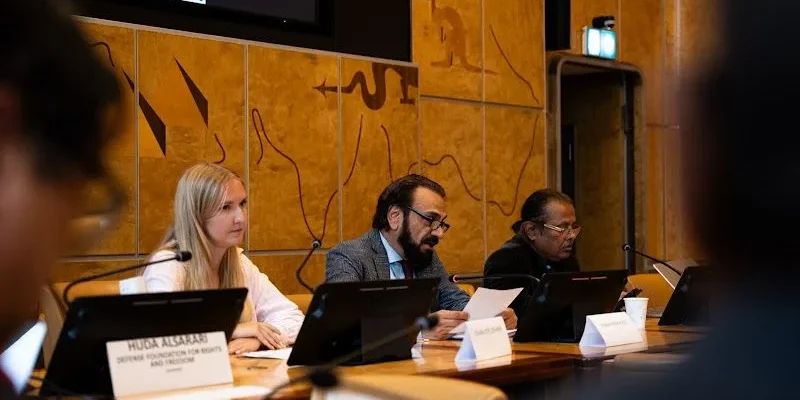
Global Human Rights Defence, 2025
Geneva, Switzerland
GHRD official press release
8th of September 2025
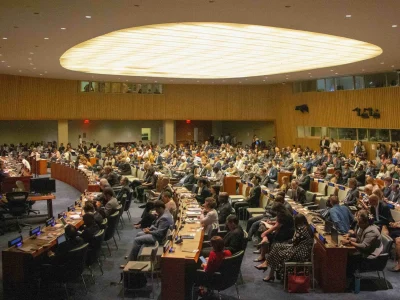
On 8 September 2025, Global Human Rights Defence (GHRD), together with partners, hosted a side event at the 60th Session of the Human Rights Council in Geneva entitled “Voices from the Margins: Protecting Minority Rights in South Asia.” The event, attended by around 50 members of civil society, missions, and permanent representations, including Greece, Denmark, China, India, and Bangladesh, brought together human rights defenders and representatives of minority communities from across South Asia to shed light on systemic discrimination, violence, and exclusion.
The event opened with remarks by Charlotte Zehrer, Human Rights Officer at GHRD, who underlined the urgency of amplifying minority voices at the international level:
“Protecting minority rights is not an act of charity. It is a question of justice, equality, and dignity — and central to building peaceful, inclusive, and resilient societies.”
The human rights officer highlighted the concerning situation across South Asia, pointing to religious persecution in Pakistan, the targeting of Hindus and indigenous groups in Bangladesh, restrictions on cultural and religious freedoms in Tibet, and the ongoing marginalization of Tamils in Sri Lanka. She stressed that the Human Rights Council has a vital responsibility to ensure minority concerns remain central to its work.
Testimonies from Minority Representatives
Mr. Mehmmod ur Rehman Anwar, International Consultant on Human and Development Rights and Public Relations Officer for the Ahmadiyya Muslim Community in Switzerland, spoke on behalf of the Ahmadiyya community in Pakistan. He detailed how Ahmadis are criminally targeted under discriminatory laws that deny them the right to identify as Muslims or freely practice their faith. “For Ahmadis, even basic religious expression can result in criminal charges,” he explained, calling on the international community to take stronger action against Pakistan’s blasphemy laws and institutionalized persecution.
Mr. Farhan Kaghzi, General Secretary of the World Sindhi Congress (WSC), addressed the plight of the Sindhi community. He highlighted the forced conversions of Sindhi Hindu women and girls, describing this as a growing crisis marked by coercion, violence, and impunity. Mr. Kaghzi urged the Human Rights Council to recognize forced conversions as a gross violation of international human rights standards and to press for accountability and protective frameworks for vulnerable communities in Sindh.
Speaking on behalf of the Tamil community, Mr. Ravi Kumar substituted last-minute for the British Tamils Forum. He reflected on both the historic challenges faced by Tamils in Sri Lanka and the current situation. In particular, he addressed the recent visit of the UN High Commissioner for Human Rights and the role of the OHCHR Sri Lanka Accountability Project (OSLAP). Mr. Kumar emphasized that despite international attention, Tamils continue to face entrenched discrimination and a lack of meaningful accountability for past atrocities.
Finally, Mr. Rahman Khalilur Mamun, Executive President of the International Forum for Secular Bangladesh, shed light on the situation in Bangladesh, where Hindus, Christians, Buddhists, and indigenous peoples continue to suffer from communal violence. He underlined the prevailing impunity for perpetrators and the urgent need for international support in protecting secularism, minority rights, and democratic freedoms in Bangladesh.
Strengthening the Role of the Human Rights Council
The speakers collectively emphasized that minority rights violations in South Asia are not isolated incidents but part of systemic patterns of exclusion and violence that require urgent attention from the Human Rights Council. Participants stressed that strengthening UN mechanisms, including Special Procedures and accountability initiatives, is essential to ensuring that minority voices are both heard and acted upon.
The event concluded with a call to action:
- To ensure greater visibility for minority rights concerns within the UN system.
- To create stronger international accountability frameworks for states that fail to protect minorities.
- To foster closer connections between grassroots communities and global decision-making spaces.
Comments