
 By
By 
11-05-2026| Dominik Miklósi | Asia Researcher, Global Human Rights Defence.
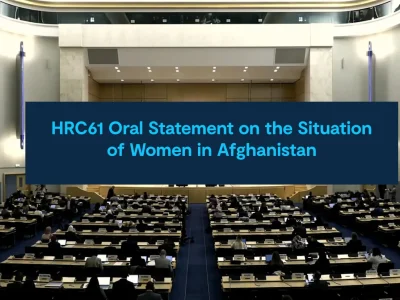
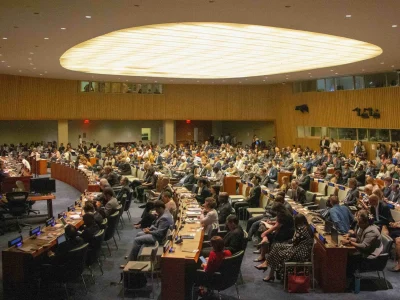
The island state of Singapore will be under scrutiny for the fourth time by the United Nations Human Rights Council’s Universal Periodic Review (UPR) Working Group. The country’s current human rights issues and recent developments will be discussed at the session held in the Assembly Hall of the Palais des Nations.
On May 12th, 2026, the status of human rights in Singapore will be assessed by the United Nations Human Rights Council’s Universal Periodic Review (UPR) Working Group in Geneva, Switzerland. Ms. Rahayu Binte Mahzam, Minister of State at the Ministry of Digital Development and Information and at the Ministry of Health, will be heading the State’s delegation.
Singapore’s examination will be grounded in three categories of documents, including a national report by the state, a compilation of United Nations information, and a summary of stakeholders’ information.
This review comes in a particularly interesting period for Singapore in light of Human Rights Watch’s (HRW) World Report 2026, which details several serious human rights concerns. According to the freedoms watchdog, the Southeast Asian nation discriminates migrant workers, as they are not protected under the country’s Employment Act; instead, the Employment of Foreign Manpower Act applies to them. The latter instrument allows employers to terminate the migrant labourers’ contracts at will and opens an avenue to send them to unsafe countries. Moreover, the report highlights issues concerning women’s rights, such as sexual harassment at the workplace, along with the sexual and racial abuse of women political candidates in election campaigns. HRW also emphasises the problem of the death penalty, which still plays an instrumental role in the criminal justice system of Singapore, as in 2025 a total of 15 individuals were subjected to the capital punishment. Additionally, the status of freedom of expression and peaceful assembly is condemned by the organisation. This is due to Singapore’s vague and stringent laws employed to silence voices against the State and to limit civic space.
The upcoming United Nations session will open a valuable discussion on the above-listed issues, which may prove to be an important step towards addressing the concerns.

Comments