
 By
By 
11-05-2026 | Dominik Miklósi | Asia Researcher, Global Human Rights Defence.
Sanae Takaichi, the Prime Minister of Japan, recently spoke about the necessity of amending the pacifist clause of the country’s constitution to keep pace with developments on the international stage. Opinions on the matter are divided within Japanese society, with large anti-war protests being carried out by citizens to demonstrate their disapproval of the legislative reform.
On May 3rd, 2026, the 79th anniversary of the Japanese Constitution entering into force took place. Partly stemming from this occasion, Sanae Takaichi, the Prime Minister of the East Asian country, who has been in office now for about six months, propelled forward a new effort to amend Article 9 of the instrument. The provision, embodying the pacifist clause renouncing war, has been a cornerstone element of the domestic legal framework since shortly after the end of World War II. According to Prime Minister Takaichi, who strongly endorses dialogue in the Diet, the Japanese Parliament, on the potential amendment, “Debate cannot be for debate’s sake. To meet the responsibility entrusted to us by the public, politicians must engage in discussions that lead to decisions”.
Article 9 explicitly prohibits Japan from threatening the use of or de facto employing military force to address international disputes. As reasoning for the desired legislative change, the Prime Minister stated that the Constitution “should periodically be updated to reflect the demands of the times”. By this, the leader of Japan likely referred to the emerging threats from China and North Korea, implying that the current legislation holds the country in deadlock, barring it from an effective response if necessary.
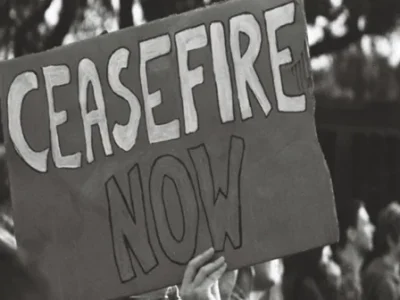
The words of Prime Minister Takaichi caused turbulence in parts of the island nation’s society. Anti-war protesters have flooded the streets of Tokyo with placards and flags to show their disagreement, as they believe amending Article 9 would make an irreversible dent on Japan’s pacifist identity. One of the demonstrators said that “[…] Article 9 in particular, must be protected at all costs”, adding that “It kept Japan from being drawn into past conflicts like the US-Iran war. Without it, we surely would have entered the war by now”.
This development is extremely relevant from the angle of international human rights law, as it ties into the right to peace and security, which may be at risk if the constitutional reform is realised in the future.



Comments