
 By
By 
Giulia Villa, Europe Team Researcher
Abdullah Al Hasan, via Unsplash/ June 28th, 2024
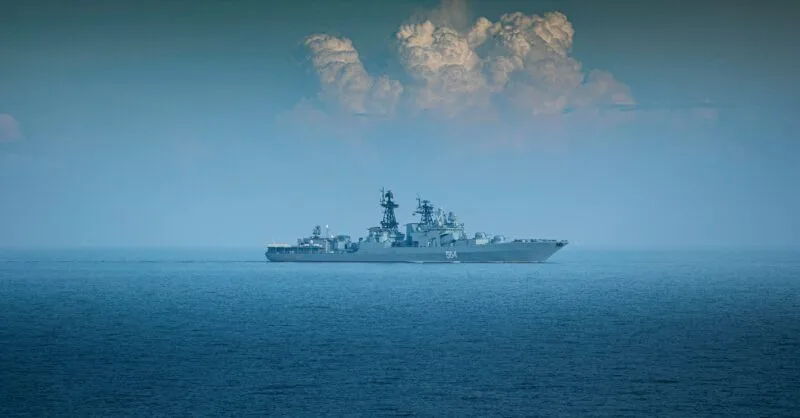
In late September, Spain and Italy deployed military ships to escort the Global Sumud Flotilla—over 50 boats from 44 countries—aiming to break the Gaza blockade and deliver humanitarian aid after recent drone attacks along the Greek coast threatened the mission.
During the last week of September the waters of the Mediterranean experienced an unusual mobilisation by Spain and Italy of military ships to escort the Global Sumud Flotilla, an initiative of civil society composed of over 50 boats coming from 44 countries of numerous activists, international citizens, and parliamentarians, with the objective of breaking the siege on Gaza and bringing humanitarian aid.
The decisions of Italy and Spain come following targeted drone attacks along the Greek and Crete coasts, with the damaging of numerous boats. Both ships have been deployed to provide protection measures to the civilians on board, but at the same time such a gesture becomes symbolic and necessary for the protection of the principles of international law and human rights. It remains uncertain, however, what the actual extent of the support will be, especially once the flotilla enters the waters subject to the naval blockade imposed by Israel in an illegitimate manner. The members of the fleet have condemned the attacks highlighting them as an attempt to intimidate and silence the non-violent activists.
In the night, between September 23rd and 24th, 2025 the flotilla had suffered an attack south of Crete, in international waters with drones, sound bombs, explosive devices and irritating spray that had caused serious damage to the boats. Such an event triggered a heated political debate in Italy. The Italian Premier Giorgia Meloni, who was participating in New York at the General Assembly of the United Nations, condemned the attacks but at the same time defined the decision of the activists as irresponsible, causing serious difficulties to the government. Afterwards, the Minister of Defense Crosetto confirmed the sending of an escort of the Italian Navy to guarantee the safety of the participants, also deeming it useless and dangerous to insert oneself into a war scenario to deliver aid. The oppositions responded harshly to such declarations, affirming that the activists are doing what the European governments should have done and that the decision to act by the Global Sumud Flotilla demonstrates the will to act in the face of a government inert in front of the ongoing genocide.
The action of the flotilla brings to light two fundamental principles protected by international law, the freedom of navigation on the high seas and the protection of civilians in armed conflicts enshrined by the Montego Bay Convention and the Fourth Geneva Convention. For this reason, the mission is to be considered legitimate and in conformity with international law. On the contrary, not defending the boats would be to be considered a crime since the government has the obligation to protect ships flying the Italian flag and their crews, also resorting to force if necessary, and Israel has no jurisdiction in the waters that bathe Gaza. The naval blockade imposed by Israel and the alleged armed attacks against the boats constitute a blatant violation of international law.
Spain also, which unlike Italy, in recent months has carried out effective concrete measures to break ties with Israel and denounced the ongoing genocide in Gaza, has through Prime Minister Pedro Sanchez announced and sent a military ship to protect the fleet following the Italian decision, ready to intervene in case of necessity and to offer protection to the numerous Spanish activists and European citizens on the boats. Sanchez in fact recalled the necessity to defend and respect international law and the right of citizens to navigate in safety, warning against the use of double standards in the application of international norms.
The arrival of the Global Sumud Flotilla, which had departed from Barcelona on September 1st, was expected in the area of maximum risk, but the activists despite the risk to their safety remained firm in their position to increase political and diplomatic pressure on Israel. The mission was of fundamental importance since the main objective was to break the siege of Gaza and the naval blockade imposed by Israel through the creation of a permanent humanitarian corridor towards the Strip, which at the same time could redefine the way in which international actors respond to the deliberate restriction of humanitarian aid.
The Global Sumud Flotilla with its mission represents not only an example of nonviolent and international civil commitment but is a tangible symbol of the role of civil society in putting pressure on institutions and on the international community to guarantee the respect of international law and human rights. The world has since observed the destiny of this mission but also the weight of the international responsibility of governments for the protection of civilians and the respect of maritime law.



Comments